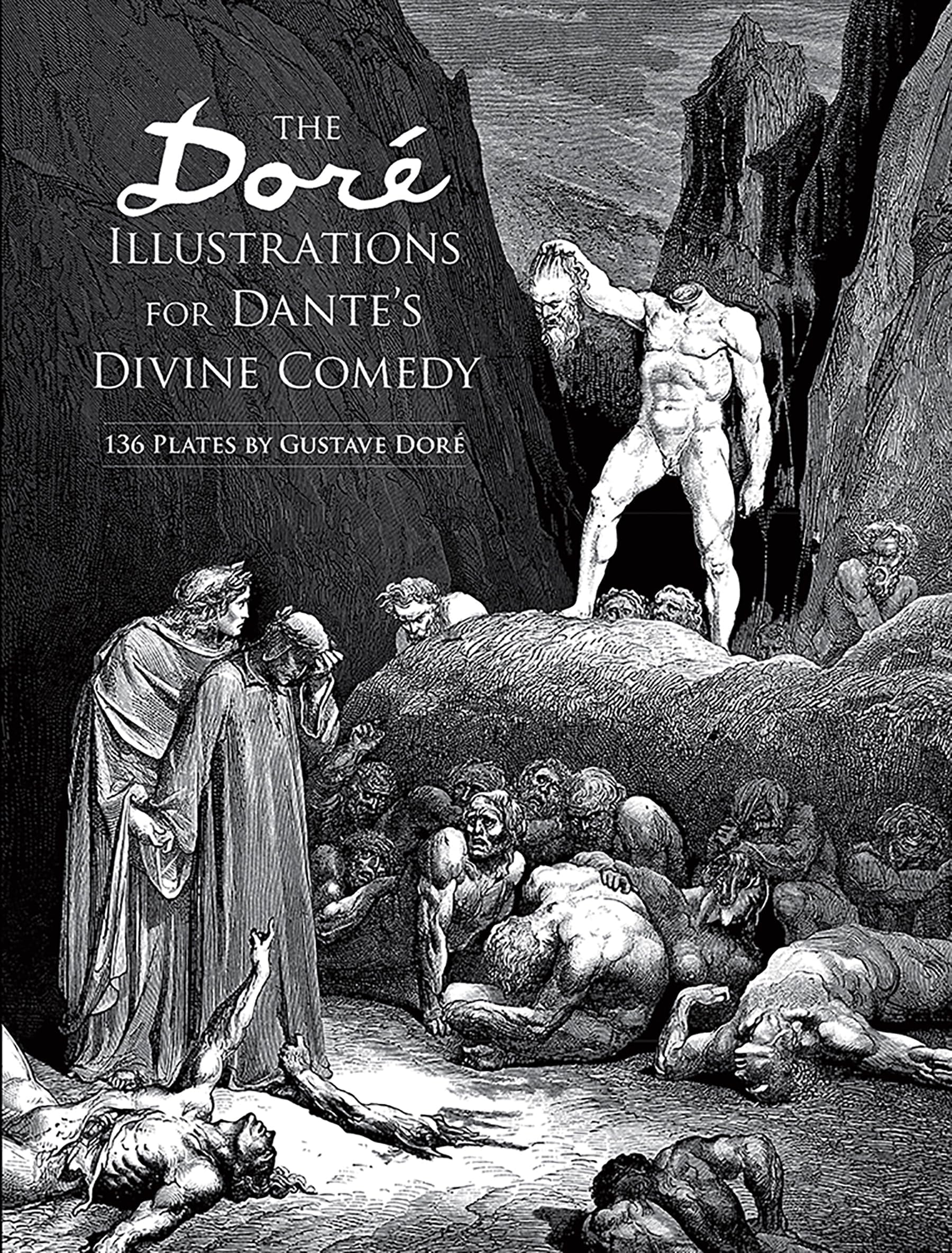

The Dore Illustrations for Dante's Divine Comedy (136 Plates by Gustave Dore)
Product ID: 2310723
Buy anything from 5,000+ international stores. One checkout price. No surprise fees. Join 2M+ shoppers on Desertcart.
Desertcart purchases this item on your behalf and handles shipping, customs, and support to Lithuania.
Gustave Doré's illustrations for Dante's Divine Comedy are an unforgettable visual journey through nightmare landscapes of eternal damnation to the very core of Hell. In The Doré Illustrations for Dante's Divine Comedy , Doré reproduces with excellent clarity Dante Alighieri's sublime poetic masterpiece in 135 plates of The Inferno, Purgatory, and Paradise; an extraordinarily vivid and imaginative account of the poet's allegorical journey through the afterlife . From the depths of hell onto the mountain of purgatory and up to the empyrean realms of paradise , Doré's illustrations depict the passion and grandeur of the epic poem in such famous scenes as the embarkation of the souls for hell, Paolo and Francesca (four plates), the forest of suicides, Thaïs the harlot, Bertram de Born holding his severed head aloft, Ugolino (four plates), the emergence of Dante and Virgil from hell, the ascent up the mountain, the flight of the eagle, Arachne, the lustful sinners being purged in the seventh circle, the appearance of Beatrice, the planet Mercury, and the first splendors of paradise, Christ on the cross, the stairway of Saturn, the final vision of the Queen of Heaven, and many more. Each plate is accompanied by appropriate lines from the Henry Wadsworth Longfellow translation of Dante's work, including the phrase often used in a humorous sense in the illustration The Gate of Hell (plate 8), "All hope abandon, ye who enter in!" Engraver, printmaker, sculptor, and woodcut artist, Gustave Doré (1832–83) was perhaps the most successful illustrator of the nineteenth century. Doré usually drew his designs directly onto woodblocks. The Doré Bible was a treasured possession in countless homes, and his best-received works continued to appear through the years in edition after edition. His illustrations for Dante's Divine Comedy constitute one of his most highly regarded efforts and were Doré's personal favorites. A frontispiece illustration of author Dante Alighieri is included on the 136th plate. Dover publishes an extensive collection of world-class fine art and art history books, plus an amazing variety of fine art coloring books. Review: Very premium prints of amazing artwork - Dante Alighieri's Divine Comedy is a masterpiece of world literature, and Gustave Doré's illustrations have helped to bring the epic poem to life for generations of readers. Doré's illustrations are widely considered some of the most iconic and influential depictions of Dante's vision of the afterlife. First published in 1861, Doré's illustrations depict the vivid and often grotesque landscapes and characters that populate Dante's three-part journey through Hell, Purgatory, and Paradise. Doré's highly detailed and intricate drawings capture the imagination and add a layer of depth to the already complex and layered narrative of the Divine Comedy. One of the most striking features of Doré's illustrations is the use of light and shadow. Doré's mastery of chiaroscuro creates an atmosphere of both terror and awe, drawing the viewer deeper into Dante's vision of the afterlife. The intricate detail of the illustrations is also noteworthy, with each image depicting a vast array of characters and landscapes that capture the imagination and bring the story to life in a way that words alone cannot. Doré's illustrations are not without their critics, however. Some argue that the highly romanticized and often exaggerated style of the illustrations can sometimes detract from the overall tone and message of the Divine Comedy. Others argue that the illustrations can be overwhelming and distract from the text itself. Despite these criticisms, it is hard to deny the enduring impact that Doré's illustrations have had on popular culture and the artistic representation of Dante's Divine Comedy. The images have been widely reproduced in countless editions of the poem, as well as in films, television shows, and even video games. The illustrations have also influenced numerous artists and illustrators in the decades since their creation. In conclusion, Gustave Doré's illustrations of Dante's Divine Comedy are a powerful and influential visual interpretation of one of the most significant works in world literature. While they may not be without their flaws, the level of detail and mastery of technique that Doré brought to the illustrations has cemented their place in the canon of great works of art. Whether you are a fan of Dante's work or simply appreciate the power of great illustration, Doré's work is a must-see for anyone interested in the visual representation of literature. This book gives the art the respect it deserves. Review: Nightmare masterpieces illustrating the terrors of the inferno - Gustave Dore, the most successful illustrator of the 19th century, has produced a grim, dark, precise, nightmare masterwork in his illustrations for the Divine Comedy by Dante. For those familiar with the vast poem, The Divine Comedy, it is obvious that Dore knew the work well and in his grisly etchings captures the terror that dwells at the edge of each scene. Dore is a master of strategic composition with his careful, thoughtful arrangements of dark and light so as to direct the eye of the viewer to the center of interest. In misery the souls of the dead get into Charon's boat and are taken across the River Acheron. Dante mixed pagan and Christian images in the underworld and Dore captures both. Dante is lead into Limbo by the pagan Roman poet Virgil where he meets the great poets of antiquity who can never cross into heaven due to their pagan beliefs. Dante is often pictured clinging to Virgil as the souls of the dead reach for him. As Dante and Virgil cross the Styx, the doomed lost souls come out of the water and attempt to cling to the boat. Demons are illustrated in the classical bat wing style, but looking oily due to Dore's illustration skills. It only makes sense that pagan mythological creatures would reside in the inferno as they were pre-Christian. Thus Dante and Virgil encounter a Minotaur and Centaurs. Suicides become gnarly trees, sexual seducers are whipped by demons, while flatterers live in a pond of feces. The journey gets worse as they encounter damned souls that are so grossly disfigured that their dismantled body parts all act independently. Forgers must itch and scratch into eternity. Traitors are frozen for eternity in ice with only their heads above the water and ice line. Of course there are historic and church figures throughout for Dante made commentary about those in public and religious life with whom he disagreed. Purgatory is full of naked people but is far less interesting than the inferno. The images of Paradise are anemic in comparison to those of the Inferno. The book is actually fun to view, packed with full page illustrations, and wonderfully creepy illustrations of the tortures of Hell.


| Best Sellers Rank | #200,233 in Books ( See Top 100 in Books ) #51 in Printmaking (Books) #254 in Religious Poetry (Books) #323 in Arts & Photography Criticism |
| Customer Reviews | 4.8 out of 5 stars 844 Reviews |
J**R
Very premium prints of amazing artwork
Dante Alighieri's Divine Comedy is a masterpiece of world literature, and Gustave Doré's illustrations have helped to bring the epic poem to life for generations of readers. Doré's illustrations are widely considered some of the most iconic and influential depictions of Dante's vision of the afterlife. First published in 1861, Doré's illustrations depict the vivid and often grotesque landscapes and characters that populate Dante's three-part journey through Hell, Purgatory, and Paradise. Doré's highly detailed and intricate drawings capture the imagination and add a layer of depth to the already complex and layered narrative of the Divine Comedy. One of the most striking features of Doré's illustrations is the use of light and shadow. Doré's mastery of chiaroscuro creates an atmosphere of both terror and awe, drawing the viewer deeper into Dante's vision of the afterlife. The intricate detail of the illustrations is also noteworthy, with each image depicting a vast array of characters and landscapes that capture the imagination and bring the story to life in a way that words alone cannot. Doré's illustrations are not without their critics, however. Some argue that the highly romanticized and often exaggerated style of the illustrations can sometimes detract from the overall tone and message of the Divine Comedy. Others argue that the illustrations can be overwhelming and distract from the text itself. Despite these criticisms, it is hard to deny the enduring impact that Doré's illustrations have had on popular culture and the artistic representation of Dante's Divine Comedy. The images have been widely reproduced in countless editions of the poem, as well as in films, television shows, and even video games. The illustrations have also influenced numerous artists and illustrators in the decades since their creation. In conclusion, Gustave Doré's illustrations of Dante's Divine Comedy are a powerful and influential visual interpretation of one of the most significant works in world literature. While they may not be without their flaws, the level of detail and mastery of technique that Doré brought to the illustrations has cemented their place in the canon of great works of art. Whether you are a fan of Dante's work or simply appreciate the power of great illustration, Doré's work is a must-see for anyone interested in the visual representation of literature. This book gives the art the respect it deserves.
C**S
Nightmare masterpieces illustrating the terrors of the inferno
Gustave Dore, the most successful illustrator of the 19th century, has produced a grim, dark, precise, nightmare masterwork in his illustrations for the Divine Comedy by Dante. For those familiar with the vast poem, The Divine Comedy, it is obvious that Dore knew the work well and in his grisly etchings captures the terror that dwells at the edge of each scene. Dore is a master of strategic composition with his careful, thoughtful arrangements of dark and light so as to direct the eye of the viewer to the center of interest. In misery the souls of the dead get into Charon's boat and are taken across the River Acheron. Dante mixed pagan and Christian images in the underworld and Dore captures both. Dante is lead into Limbo by the pagan Roman poet Virgil where he meets the great poets of antiquity who can never cross into heaven due to their pagan beliefs. Dante is often pictured clinging to Virgil as the souls of the dead reach for him. As Dante and Virgil cross the Styx, the doomed lost souls come out of the water and attempt to cling to the boat. Demons are illustrated in the classical bat wing style, but looking oily due to Dore's illustration skills. It only makes sense that pagan mythological creatures would reside in the inferno as they were pre-Christian. Thus Dante and Virgil encounter a Minotaur and Centaurs. Suicides become gnarly trees, sexual seducers are whipped by demons, while flatterers live in a pond of feces. The journey gets worse as they encounter damned souls that are so grossly disfigured that their dismantled body parts all act independently. Forgers must itch and scratch into eternity. Traitors are frozen for eternity in ice with only their heads above the water and ice line. Of course there are historic and church figures throughout for Dante made commentary about those in public and religious life with whom he disagreed. Purgatory is full of naked people but is far less interesting than the inferno. The images of Paradise are anemic in comparison to those of the Inferno. The book is actually fun to view, packed with full page illustrations, and wonderfully creepy illustrations of the tortures of Hell.
T**S
Vultures and spiders and Hell - o my!
Although just a man, the prolific career of Gustove Dore really has some divine inspiration. Perhaps that's one reason the church needed him so much - perhaps something really did reach out and whisper his name and someone listened. (Personally I hope that thing was Cthulhu and the dreams were bad, but that's just me) As far as this book goes, it is one of the easiest to gain entry into a very exciting world. I like the way the rendering are set to tell the story, too, allowing the reader to walk through some frightening gates and look into some of the terrible things that are described in a language that sometimes does seem heavy (Personal opinion and I don't mean offense by it). When I look at this, it reminds me of the journey that I took as a young adult while learning about all those names and faces that I didn't know. It also reminds me of everything from people with their bodies buried in the ground to one poor soul writhing as a half spider/half woman appeared on the ground. Dore is that kind of influence and I'm glad that someone granted me entry into this world because, if they hadn't, I would have missed out on so much. So, brielf, I have to say that this is well worth the price of admission and it is well worth obtaining so you can look at the detail and marvel at the tools being utilized. also, look into the other books. The bible, the mad; Dore was inspired by everything. And that is inspiring, to say the least.
A**R
Gorgeous Illusions
The illustrations in this book are just stunning and the attention to detail is insane. I am beyond happy that I purchased this book and I would highly recommend it.
M**S
Large, oversized paperback book from Dover Publications
Theatrical illustrations of one of literature’s most memorable books – this has illustrations for Inferno, Purgatorio, and Paradiso. Tremendous use of darkness and light. Pictorial suffering. Outstanding companion work to The Divine Comedy, and helpful for other well-rounded readers of the classics. This will even help with C.S. Lewis’s Narnia books. Dore depicts fascinating, contorted nudity perfectly. Dore depicts gleaming cloaks and robes in the crystalline heavens perfectly. It’s amazing work.
D**.
From Virgil to Beatrice, it's quite a ride
The classic (actually, romantic) engravings produced for a 19th-century French translation of the Commedia have been reproduced here in large format and gathered together by good old Dover book publishers for us to savor. Unsurprisingly, they mostly illustrate the Infierno, which of course has the most haunting and grisly literary imagery to work with. We get less and less coverage of the Purgatorio and Paradiso, but it is nice to see the surprisingly varied textures and detailing by the different engravers who actually conveyed Dore's original drawings to the printed page.
J**O
We finally see many more details and depth; distant beings and creatures expressions appear
For the most part this book is great, I'm really glad to now own all the plates that weren't included in a different edition of The Divine Comedy I already owned. The attached photo shows the muddy 1948 edition on the bottom; this Dover edition upper left and the same image from a 1970 collection, upper right. It must be extremely difficult to accurately reprint Dore's detailed etchings. The fractionally different shades possible using only black ink is finally revealed so we see into a darkened forest and distant cliffs. This really cleaned up the excess black ink that overdarkens- losing detail in many other editions of The Divine Comedy. Lightened we see many more details; branches in a forest have depth; distant beings and creatures appear and we see their expressions. His imagination and excellent detail are amazing. My criticism of this book: had they used a cream paper instead, the art would be warmer, less stark white. Some images become almost flat, their brightness over the page actually gives us both more and less expression. Instead of a mist it is simply white and nothing- the scene a little washed out. "A Dore Treasury- A Collection of the Best Engravings of Gustave Dore" is a cross-section of his work in different books and very good too. (image upper right) I'm looking at a 1970 edition library book and don't know about availability). Comparing them side buy side there is subtlety in the 1970 collection printed on cream stock which perfectly serves the images. I'm a new fan of The Divine Comedy, I recently bought Lawrence White's translation because I preferred his prose over some of the less rich modern translations. However that edition only had 64 of the original 136, and many of the drawings were so dark, details were muddy, lost. (image lower right ) So all in all, this book is great to have. We see what Dore' actually drew. Also, they are labeled so we know where in the text they are intended
A**T
SHOULD BE THE "OFFICIAL" ILLUSTRATIONS FOR DANTE'S CLASSIC
Perhaps they already are! I recently had the opportunity to read Danté's Divine Comedy as part of a book discussion group. Given the number of cultural references to the work I've observed and used over my life (I even entitled a college dance party "The Inferno" many years ago because the dance floor was hot!), reading the work was on my "bucket list." Of course the language and descriptions were very thick in places, and having the Dore's book of illustrations really helped the story come to life as well as helped me to stay on track while reading. The illustrations are gorgeous, in many places gruesomely so, and really convey the torture or rapture of the characters depicted in the Divine Comedy. This book of illustrations is a must-have companion to the Divine Comedy, and is highly recommended!
A**R
Prints quality is questionable
Prints are not clear.
D**S
Muy bonitos los dibujos de Doré
Me gusto mucho
V**.
Magnifico!
Il capolavoro letterario per antonomasia immaginato e reso per immagini da Dore...il resto e' superfluo
V**N
凄いコストパフォーマンス
日本でこの画集を売るとしたら値段は倍以上じゃないかな?九鬼の『神曲』には載っていない絵も入っています。つくづく「ドレ」っていうイラストレーターの元祖は凄いなって思います。
L**D
Très beau
Voici un livre sans prétention apparente, broché, en anglais ce qui n'est pas gênant car il n'y a rien à lire sauf les titres et qui renferme les planches gravées que Gustave Doré a créées pour illustrer la "divine comédie". J'ai lu Dante il y a fort longtemps et de regarder cet ouvrage m'a montré la nécessité, pour moi, de relire son oeuvre, ce que je vais faire dès que possible et ce en me reportant aux planches. Pour moi, ce genre d'ouvrage est très bien car on peut le regarder tranquillement, le poser, l'ouvrir à nouveau, s'y replonger... ce que je trouve mieux qu'une exposition de gravures où les spectateurs sont agglutinés devant chaque planche à essayer de les détailler dans des conditions inconfortables et en empêchant les autres d'approcher. Là, on a tout le temps d'apprécier l'imagination et le talent de G. Doré .
Trustpilot
1 month ago
3 weeks ago