

High Output Management
Product ID: 1609401
Buy anything from 5,000+ international stores. One checkout price. No surprise fees. Join 2M+ shoppers on Desertcart.
Desertcart purchases this item on your behalf and handles shipping, customs, and support to Lithuania.
In this legendary business book and Silicon Valley staple, the former chairman and CEO of Intel shares his perspective on how to build and run a company. A practical handbook for navigating real-life business scenarios and a powerful management manifesto with the ability to revolutionize the way we work. "An organizational Baedeker for managers at all levels. . . . A highly credible handbook for organizing work and directing and developing employees." — The New York Times The essential skill of creating and maintaining new businesses—the art of the entrepreneur—can be summed up in a single word: managing. Born of Grove’s experiences at one of America’s leading technology companies (as CEO and employee number three at Intel), High Output Management is equally appropriate for sales managers, accountants, consultants, and teachers, as well as CEOs and startup founders. Grove covers techniques for creating highly productive teams, demonstrating methods of motivation that lead to peak performance. "Generous enough with advice and observations to be required reading." — The Wall Street Journal Review: ABC's for managers - High Output Management provides a comprehensive overview of a managers role and purpose. The book focuses around a central thesis that a manager's objective is to increase the output of the work of those below and around him. A manager should therefore choose high-leverage activities that have a multiplicative impact on the overall output of his subordinates and peers. For example, providing clear direction to a team may only require a small amount of the manager's time, but yields tremendous value in terms of the output of the team. This book is great for both new and experienced managers since it provides valuable frameworks and strategies for all kinds of common managerial tasks. Below are the core topics covered in this book: * Delegation - In order to maximize leverage, a manager needs an optimal number of subordinates to whom he can delegate to. Successful delegation provides lots of leverage, whereas poor delegation ends up netting no leverage since it turns into errors and micro-management. * Meetings - Meetings are extraordinarily expensive to a company. There are three types of recurring meetings: one-on-one's, staff meetings, and operational reviews. Each of these meetings should have a clear framework for maximizing value and minimizing time-waste. There are also one-off meetings centered around making a particular decision - such meetings should be especially carefully planned and executed since they are often scheduled ad-hoc without a clear purpose and with too many participants. * Making decisions - When making decisions, there's a fragile power dynamic that needs to be carefully handled. Managers should facilitate free and open discussion amongst all parties until a consensus emerges. In cases where a consensus does not emerge naturally, the manager should push for a decision. * Dual reporting - Dual reporting is inevitable in most large organizations. Consider advertising: should each division of a company decide and pursue its own advertising campaign, or should all of it be handled through a single corporate entity? The optimum solution calls for the use of dual reporting where each division controls most of their own advertising messages but a coordinating body of peers consisting of the various divisional marketing managers chooses the advertising agency and creative direction. * Motivating employees - Our society respects someone's throwing himself into sports, but anybody who works very long hours is regarded as sick or a workaholic. Imagine how productive our country would become if managers could endow all work with the characteristics of competitive sports? Eliciting peak performance means going up against something or somebody, and turning the workplace into a playing field where subordinates become athletes dedicated to performing at the limit of their capabilities. * Performance reviews - Performance reviews are easily mistaken as simply a way to assess performance and evaluate compensation. The fundamental goal of a performance review is to improve the subordinates performance. A review will influence a subordinate's performance for a long time, which makes the activity one of the manager's highest-leverage activities. Thus great care needs to be taken in the preparation and delivery of a performance review. Review: Concise and Informative - It is hard for me to understand how anyone could give this book less than 5 stars but I respect the opinions of others. Of all the business books and management books I have read, this is an essential read if you are trying to grow to a medium or large organization with a desire to manage it well. In fact, great books such as The Hard Thing About Hard Things and The Road Less Stupid both reference Andy Grove and this book specifically because it was so influential in shaping the successful CEOs that wrote those books. If you are running a small business with 1 or 2 employees, you don't need to read this. This book deals with complicated matters pertaining to organizations at scale, however; the content is concise and very practical, even after all of these years. Problems I have contemplated seem easy to tackle after reading this book.

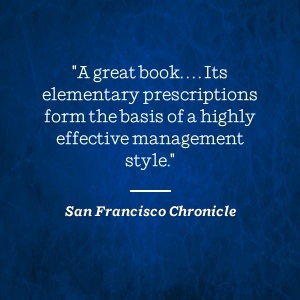
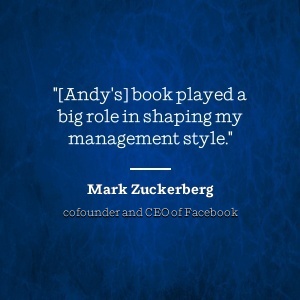
| Best Sellers Rank | #3,207 in Books ( See Top 100 in Books ) #19 in Entrepreneurship (Books) #30 in Business Management (Books) #46 in Leadership & Motivation |
| Customer Reviews | 4.6 out of 5 stars 5,772 Reviews |
A**A
ABC's for managers
High Output Management provides a comprehensive overview of a managers role and purpose. The book focuses around a central thesis that a manager's objective is to increase the output of the work of those below and around him. A manager should therefore choose high-leverage activities that have a multiplicative impact on the overall output of his subordinates and peers. For example, providing clear direction to a team may only require a small amount of the manager's time, but yields tremendous value in terms of the output of the team. This book is great for both new and experienced managers since it provides valuable frameworks and strategies for all kinds of common managerial tasks. Below are the core topics covered in this book: * Delegation - In order to maximize leverage, a manager needs an optimal number of subordinates to whom he can delegate to. Successful delegation provides lots of leverage, whereas poor delegation ends up netting no leverage since it turns into errors and micro-management. * Meetings - Meetings are extraordinarily expensive to a company. There are three types of recurring meetings: one-on-one's, staff meetings, and operational reviews. Each of these meetings should have a clear framework for maximizing value and minimizing time-waste. There are also one-off meetings centered around making a particular decision - such meetings should be especially carefully planned and executed since they are often scheduled ad-hoc without a clear purpose and with too many participants. * Making decisions - When making decisions, there's a fragile power dynamic that needs to be carefully handled. Managers should facilitate free and open discussion amongst all parties until a consensus emerges. In cases where a consensus does not emerge naturally, the manager should push for a decision. * Dual reporting - Dual reporting is inevitable in most large organizations. Consider advertising: should each division of a company decide and pursue its own advertising campaign, or should all of it be handled through a single corporate entity? The optimum solution calls for the use of dual reporting where each division controls most of their own advertising messages but a coordinating body of peers consisting of the various divisional marketing managers chooses the advertising agency and creative direction. * Motivating employees - Our society respects someone's throwing himself into sports, but anybody who works very long hours is regarded as sick or a workaholic. Imagine how productive our country would become if managers could endow all work with the characteristics of competitive sports? Eliciting peak performance means going up against something or somebody, and turning the workplace into a playing field where subordinates become athletes dedicated to performing at the limit of their capabilities. * Performance reviews - Performance reviews are easily mistaken as simply a way to assess performance and evaluate compensation. The fundamental goal of a performance review is to improve the subordinates performance. A review will influence a subordinate's performance for a long time, which makes the activity one of the manager's highest-leverage activities. Thus great care needs to be taken in the preparation and delivery of a performance review.
C**S
Concise and Informative
It is hard for me to understand how anyone could give this book less than 5 stars but I respect the opinions of others. Of all the business books and management books I have read, this is an essential read if you are trying to grow to a medium or large organization with a desire to manage it well. In fact, great books such as The Hard Thing About Hard Things and The Road Less Stupid both reference Andy Grove and this book specifically because it was so influential in shaping the successful CEOs that wrote those books. If you are running a small business with 1 or 2 employees, you don't need to read this. This book deals with complicated matters pertaining to organizations at scale, however; the content is concise and very practical, even after all of these years. Problems I have contemplated seem easy to tackle after reading this book.
J**.
A great primer for middle managers
I'm a Vice President at a small public company, and I've been managing people for over ten years, and have an MBA from a top ranked business school. Still, I wish I had read this book when I first started managing people. This certainly appears to me to be a book written by Andy Grove for his own managers at Intel, and I found it interesting to see how he thinks about management. Not surprisingly, he has a very pragmatic, operational view of what good managers do, and he presents a comprehensive guide for all the basics. His whole orientation is that managers are responsible for the total output of their teams, and his focus is always on accomplishments and outputs, not activities. Topics that are included - Looking at your operations and finding the bottle necks - How to monitor and check your processes for high quality and high output - How managers should spend their time, run team meetings, and stay in touch with subordinates through one on ones - How to hire, coach, and provide feedback to build your team What you won't find in this book - How to think about strategy - Competitive advantage - Building a brand - Competitive analysis The book has been around for a while, and it's not a trendy management book. There is no new catch phrase or research based on fMRI or paradigm shift. There is nothing sexy or trendy. But it is a very solid introduction from someone who has proven to be among the best at managing. This is one of the great CEOs of our times, and I brilliant mind, passing along what he wants his managers to know. I think that many managers could vastly improve their performance if they studied and mastered the basics covered here rather than the nifty new concept from the latest HBR.
A**G
Amazing book to reread and study
I'm an avid reader, but this is the first book that has moved me to write a review. In summary it's brilliant and absolutely still 100% relevant. After finishing reading through the book, I immediately started re-reading it. In the forward by Ben Horowitz, he writes "First, in as little as one sentence, it lucidly explains concepts that require entire books from lesser writers. Second, it consistently uncovers brand-new management ideas or finds new insights into old standards. Finally, while most management books attempt to teach basic competency, High Output Management, teaches the reader how to be great." I think that's a really good summary. The first sentence is worth highlighting though. This book contains a ton of wisdom in 230 pages. If there's a flaw with the book, it's that it's too dense with wisdom. It's like an amazing teacher has condensed a full two-year Stanford MBA program into one small book. It is NOT a page turner (though he's a fine writer). There is so much in each page that you need to take breaks to think over what you just read before moving on. Regarding the forward, you can skip it the first time through. I think it's more useful as a summary review after reading through the book once.
C**S
Still relevant
My career coach recommended this, and I’m glad I picked it up. While it’s an older title, the core concepts and frameworks are still incredibly relevant. Grove’s approach to management is practical, clear, and surprisingly applicable to modern teams. A worthwhile read for anyone in leadership or aiming to grow into it.
K**K
One of the best books
This is good starting point for middle managers on understanding their role is an organizations vision and how to create value using the resources
J**B
A very worthwhile read, honest and practical.
This is not a review, rather some thoughts that occurred to me while reading the book. As manager of a small team I found the book to be full of very practical advice. In particular, the Part 4 - The Players contains very useful processes which are immediately applicable to my daily activities as a manager. Grove's main accomplishment in this book, is the simplification of very complex organizational concepts and processes into simple steps that anyone can follow and manage. Grove is clearly a decisive individual, this also emerges clearly from the text. He lays out a dilemma, lists the pros and cons and then makes a decision, for better or worse. The book is also a very frank account of the ups and downs of management, the author shares his mistakes and moments when his judgement was not accurate. You get the feeling, that he wrote the book, had it proof read and published, and was not at all concerned with the politics or how he would be perceived. Grove's dedication to Intel and its employees is also abundantly clear, it must have been a real privilege to work with a manager to that caliber.
D**L
Must read for both managers and individual contributors
Every manager should have read this book. Written in 1983 it is still very relevant. Back in a day this book been written the concepts described in it should have appeared as novel and modern. In 201x it should be regarded as common knowledge. Yet judging by personal experience, it is not. Too many fundamental mistakes been allowed in a modern business by newly promoted but also experienced managers. While they could have just read this book. Andrew Grove, the long-serving CEO of Intel, shares practically applicable strategies for middle and high-level managers. He also takes an effort to describe how modern hybrid enterprises work. The book provides necessary theory and completes it with real-world examples from one of the biggest and immersively successful company. I'd recommend this book to both managers and individual contributors as it may increase the effectiveness and work satisfaction for both parties.
B**Y
Simple guide to smart management
One of the best business books I've read in a long time. Short book, common sense and to the point. Written by Andrew Grove former CEO of Intel. I would challenge anyone to review their own workplace, their own work practices using some of Grove's ideas. Liked the simple idea on the manager's preparation for decision making: What decision needs to be made? English: Portrait of Andrew Grove. (Photo credit: Wikipedia) When does it have to be made? Who will decide? Who will need to be consulted prior to making the decision? Who will ratify or veto the dcision Who will need to be informed of the decision? Pity it does not happen more often. On meetings I think he is right: two types. Are we talking of a process oriented meeting (one-on-one, staff meetings, operations reviews) or a mission-oriented meeting? The discussion of hybrid organisations and dual reporting is straightforward and recognises the reality of how many businesses need to be structured. Liked the honesty of his section on performance appraisal. And his clarity on the importance of this process, the need for preparation and the rationale for the process in the first instance. Not sure I fully agreed with him on his views on trying to retain people who say they are going to leave. Finally - he is very clear on the manager's role and responsibility for training - including preparation and delivery of training. I would see this as a major failing with many managers in industry. And a major missed opportunity.
F**N
Ready to build “high performing teams”
One of the best books I’ve read on Management. It was tipped to me by a great entrepreneur and leader. A must read for everyone who is trying to get more understanding and thus more knowledge to put in practice. I loved the checklist in the back of the book. I’ve read the Kindle edition!
C**Y
Great book
I came at this book from a different book and should have read this book first. The way Andy explains business is based in common sense and as a result it is so easy to understand. I can certainly recommend this book and once you have read this book try “Measure what matters” by John Doerr because it follows on from this book to explain about OKR’s, a tool that Andy Grove gave birth to!
S**M
Still Immensely Practical and Useful
Yes as most would mention the ideas come from a system based machine metaphor kind of thinking. Its how an Engineer and scientist works. However all the ideas are thought provoking and fully applicable in the current environment. I have used most of the ideas in the book and can vouch they work in my case. It is a constant process of doing, testing and improving. Hope you will find it practical and useful as well
S**A
Grande classico del management ancora di attualità
Ottimo libro di management scritto da uno dei maggiori manager (e poi docente). Ho trovato molte delle cose che poi ho ritrovato in corsi attuali di management della HBS. Da leggere se si hanno aspirazioni da manager.
Trustpilot
4 days ago
2 months ago