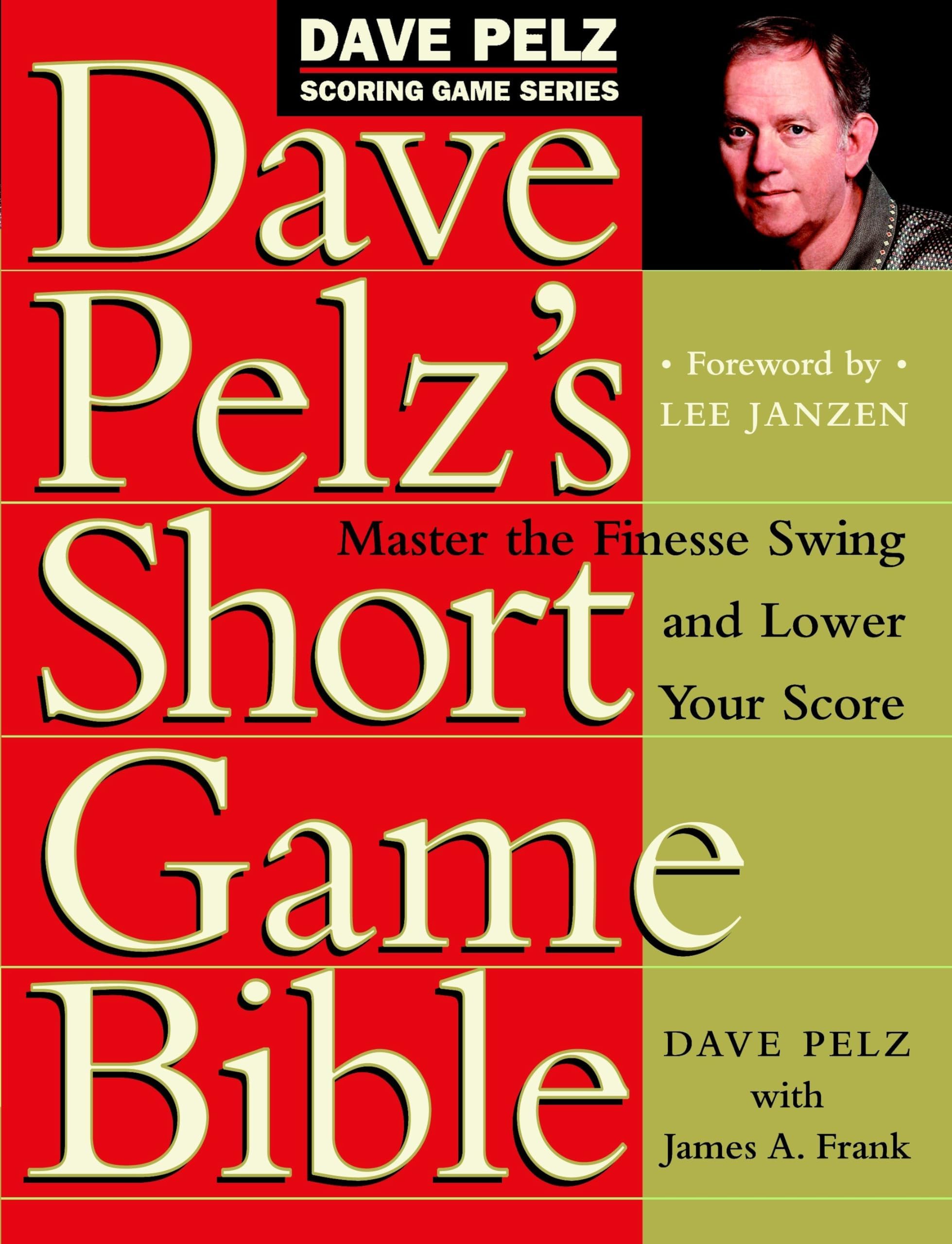
Dave Pelz's Short Game Bible: Master the Finesse Swing and Lower Your Score (Dave Pelz Scoring Game)
Product ID: 1274481
Buy anything from 5,000+ international stores. One checkout price. No surprise fees. Join 2M+ shoppers on Desertcart.
Desertcart purchases this item on your behalf and handles shipping, customs, and support to Lithuania.
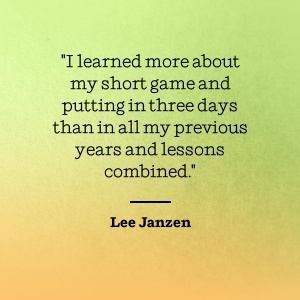
NATIONAL BESTSELLER • Internationally revered golf instructor Dave Pelz's bestselling classic can show you the way to lower scores by improving your short game. With a Foreword by Lee Janzen, two-time U.S. Open winner and eight-time winner on the PGA Tour. "He who rules the short game collects the gold."— Dave Pelz's Golden Rule of Golf Fed up with trying to imitate the pros, buying the latest expensive equipment, and seeing your handicap stay the same? The pros know, as you are about to learn, that while others teach golfers how to swing, Dave Pelz teaches golfers how to score...and win. The result of decades of scientific research studying thousands of golfers, Dave's philosophy is as simple as it is revolutionary and groundbreaking: Instead of practicing the wrong things the right way, or the right things the wrong way, Pelz shows you how to find your own personal weaknesses and how to improve them to efficiently lower your scores. Packed with all the knowledge, charts, and photos needed to learn from the master, Dave Pelz's Short Game Bible is the essential book for every golfer who's looking to improve his or her game. A former physicist for NASA, Dave brings a scientific rigor to his research and instruction that has made him the top short-game expert in the world. His renowned golf schools and clinics focus exclusively on putting and the short game, attracting top players like Tom Kite, Colin Montgomerie, two-time U.S. Open champion Lee Janzen, reigning PGA champion Vijay Singh, Steve Elkington, Payne Stewart, Peter Jacobsen, and many LPGA players including Annika Sorenstam and Liselotte Neumann. Review: Realistic advice for real players - As a graduate engineer and another NASA scientist, I can vouch for the science that lies behind Pelz's book, but I'm sure most potential readers know that Pelz is the real thing in that respect. The book itself impressed me in three ways: 1. It isn't written for scientists, just golfers. He provides all the information you need to make your own game better, but avoids the physics that underlie the advice. Pelz saves that level of science for the journals. 2. This is a textbook, not a teaser. After telling you what you should try to achieve with each type of shot, he goes into the greater detail you start wanting as soon as you actually start to practice a technique. Things like how much difference in roll distance you should expect between a lob wedge, a pitching wedge, and a nine iron for the same pitch distance. Most "tips" sound good, but leave you wondering why they aren't quite working when you get to the course. Pelz starts you out with the basics of each technique and then follows through with the details you need to really use it on a course. 3. He avoids the "genius" techniques that some folks love to describe. His techniques work for people who are not born artists with a club, and even those of us who lack a spare thirty hours a week to practice the short game. (The amazing number of pros who go to his schools testifies to the value of his advice when you actually do have time to practice.) This is scoring golf for the rest of us. I'm not Seve, nor are most people. Pelz describes techniques that are more likely to work than not on any given swing because the physics of the swing are in favor of success. An Excellent book. It should be in the library of any golfer who ever accepts a two-dollar Nassau. Review: Extremely comprehensive backed by statistics - Most comprehensive book on the short game I've found. Details with statistics how vital the short game is over the long game and then meticulously explains how to play all of the various shots which not only includes pitching and chipping but also sand play, uphill lies, downhill lies and terrain. Provides various drills and practice routines. Surprisingly, I noticed is he doesn't detail the "Rule of 12" but does briefly touch on how loft of various clubs effect carry and rollout. Must read for improving scores.


| Best Sellers Rank | #20,122 in Books ( See Top 100 in Books ) #5 in Sports Reference (Books) #10 in Golf (Books) #574 in Reference (Books) |
| Customer Reviews | 4.6 out of 5 stars 995 Reviews |
G**S
Realistic advice for real players
As a graduate engineer and another NASA scientist, I can vouch for the science that lies behind Pelz's book, but I'm sure most potential readers know that Pelz is the real thing in that respect. The book itself impressed me in three ways: 1. It isn't written for scientists, just golfers. He provides all the information you need to make your own game better, but avoids the physics that underlie the advice. Pelz saves that level of science for the journals. 2. This is a textbook, not a teaser. After telling you what you should try to achieve with each type of shot, he goes into the greater detail you start wanting as soon as you actually start to practice a technique. Things like how much difference in roll distance you should expect between a lob wedge, a pitching wedge, and a nine iron for the same pitch distance. Most "tips" sound good, but leave you wondering why they aren't quite working when you get to the course. Pelz starts you out with the basics of each technique and then follows through with the details you need to really use it on a course. 3. He avoids the "genius" techniques that some folks love to describe. His techniques work for people who are not born artists with a club, and even those of us who lack a spare thirty hours a week to practice the short game. (The amazing number of pros who go to his schools testifies to the value of his advice when you actually do have time to practice<g>.) This is scoring golf for the rest of us. I'm not Seve, nor are most people. Pelz describes techniques that are more likely to work than not on any given swing because the physics of the swing are in favor of success. An Excellent book. It should be in the library of any golfer who ever accepts a two-dollar Nassau.
L**N
Extremely comprehensive backed by statistics
Most comprehensive book on the short game I've found. Details with statistics how vital the short game is over the long game and then meticulously explains how to play all of the various shots which not only includes pitching and chipping but also sand play, uphill lies, downhill lies and terrain. Provides various drills and practice routines. Surprisingly, I noticed is he doesn't detail the "Rule of 12" but does briefly touch on how loft of various clubs effect carry and rollout. Must read for improving scores.
C**N
Very well written, but not always practical
I was expecting this book to be really dry and boring, but was pleasantly surprised. I found it really interesting and liked the occasional comments and stories about professional golfers that Dave Pelz has worked with. Obviously, this book will appeal to someone with more of an analytical viewpoint. If you are simply interested in a how-to guide that will allow you to improve your game overnight, this probably isn't the book for you. I was interested in understanding how things worked, so this book was fascinating to me. Has this book helped my game? Yes and no. I already believed that my short game was the key to scoring better, so a lot of the book made sense to me. I did buy an additional 3 wedges just as the book recommends. I am also using the chipping technique/style outlined in the book with great success. However, I have not come close to following all of the recommendations in the book. Some of them will be hard because I don't have access to an area where I can accurately measure yardage with my wedges. That's the only downside to the book. Some of the techniques are beyond the average golfer, or require more time and resources than is practical. That's probably not the books fault though. For me, this book is a long term guide. It is thorough enough to help the really low handicappers in nauseating detail. For now, I can only take advantage of some of the recommendations. As I get better over the years, I expect to keep going back to the book to find new ways to lower my score.
S**E
Fore!
I thought this was a bible bible. it isn't. But this is a good product. It reminds me of a game of "golf" my friends and I would play during church services, since we were, well, stupefyingly bored: Methodist services are generally as dry as unleavened wafers, sans salt. My friend might say "Esther" and the par would be three, meaning three chances to open the bible to the book of Esther, a slim novella about beauty queens, drunkenness, sex (hey now), and eating ears. This was a useful game: time-consuming, instructional (you certainly learned the placement of the particular books) competitive (my friend and I both endlessly battled one another in game and sport), and definitively proved one of my suspicions of our preacher's theological approach: he only taught 2% of the holy text. Other things I enjoyed about church: the swishing sounds of women’s dresses; the odor of candles; my father singing in the choir; learning about cursing, vodka, cigarettes, French kissing, an even the game of stud poker as we huddled behind the gymnasium before and after youth group. Very useful lessons still today. Every church service ended the same, on time before NFL kickoff: the preacher hushed the congregation and pleaded for someone, anyone to come forward “and be saved.” No one moved a muscle. In fact, one day as the silence thickened except for an occasional dry cough or creak of the wooden floor, the poor man seemed to crumple, to shrink and crack, his voice quivering like a broken string: “Why won’t anyone ever come here and be saved?” I felt sorry for our preacher. He looked old and broken. Or to quote an English poet (who was really an American banker): “His face looked like a wedding cake left out in the rain.” Too bad I was only a child, or I would have had advice for the preacher—it may have eased his burden, who knows? But it is found in the other 98% of the bible.
J**T
5 Stars but with a big caveat
The reviewers name is Cheryl but I'm her husband giving this review. I'm also going to post this review with the Pelz Short Game Bible also since most comments apply to both books. The big caveat mentioned is that I took the Pelz 3-day short game school and then bought and read the Putting and Short Game Bibles. Because I went to his school these books are invaluable as resource material and as reminders of the tools and techniques we learned in the school. I have friends who've read the books and have tried to apply the techniques without the advantage of having had personal instruction and they've had less success. If you're reading this you're a golfer who wants to improve but you probably understand it's hard (impossible in my opinion) to self-teach and self-correct putting and swing flaws. For example, I read Pelz's earlier book "Putting Like the Pros" and followed the techniques to a tee (no pun intended) or so I thought. I thought I was doing everything right but was still putting poorly. I learned in the school I was doing several things incorrectly even though I thought I was doing what Dave outlined in his book. That's not to poo-poo the Putting or Short Game Bibles if you haven't, or don't intend to take one of his schools, because there's a lot of valuable information in both books that should improve your game. Just be aware that much of the material is difficult to fully comprehend via the written word as opposed to visual input from real professionals. As an example of some changes that I made that you wouldn't get from the book had to do with my putter. I had a standard lie putter that was 35 1/2 inches long. I'm 6'3" so that sounds reasonable…right? Well, it was determined in class based on my set-up, posture, putter path, eye-line, etc., that I really needed a putter that was 33 1/2" long which "forced" me to get into a proper posture and set-up. I also had to change the putter head weight, lie angle, and grip. These are things that you won't get from the book but may be critical to your ultimate success. There's some other things too, like the "finesse grip" and 7:30-9:00-10:30 swing positions in the short game that some might find confusing. Also, be aware that even though I went to the school making changes to your putting set-up, putter, stroke, etc., can be very frustrating and it will take time and require some serious practice. The same applies to the short game. Nobody ever said golf is easy though great players make it look as though it is. There are two putting aids that I will highly recommend if your serious enough to get the book and work on your putting and that's Dave's "Putting Tutor" and his "Teacher Putting Clips". He has a bunch of aids but these two are the best if you want to improve your putting. They can make a real difference in your putting accuracy. The Clips give you feed back on hitting putts on the putter sweet-spot (a critical element to good putting), and the putting tutor will confirm that your eyes are over the line of the putt and that you are able to stroke the putt along the intended path. The nice thing is that they can, and should, be used in your home. The putting tutor can be used on the practice green but that's not necessary except perhaps as a periodic check. These can purchased on Pelz' web site. I do have one criticism of the Short Game Bible and that has to do with the pitch shot (3-30 yards from the green) situations that you will confront on any course. That chapter is too general and I think more time should have been devoted to the numerous situations and alternative shot options and techniques that you should consider. Good luck, I hope my comments helped.
L**Y
Great book
Great book my son loved it
H**D
Exactly What I Needed
Dave Pelz hits the nail squarely on the head. Just within the first couple of chapters, I have learned so much information to help me so profoundly - I only wish I had had this many years ago. Just three things that I could mention, right up front: I have suffered from "chili-dip itus," for many years, and had no idea why it would happen. All I knew is that it would absolutely ruin my mood, and almost my whole day, whenever it did happen. But I found that simply playing the ball squarely in the middle of your stance, rather than too far forward, solves the problem, instantly. Secondly, I have long wanted to be able to hit a sand wedge on my short approach shots, but was petrified, like most guys are, of using a sand wedge - even in the sand trap. But I find, with his instruction, it's a piece of cake - really - and I have practiced it, and found almost immediately that my fondest desire will be easily doable next spring, and it will transform my game, I'm sure. Thirdly - sand trap shots have bedeviled me virtually every time I have ever been in a sand trap. I'll bet I could count on one hand the really good sand trap shots I have ever made in my life. But he - who actually does know whereof he speaks - makes it simple, by explaining, step-by-step, exactly how to do it, and also explains why you do it that way, and what happens when you do, and why it works. I'm not finished with the book yet - I've barely cracked the cover - but I can tell you it is a wonderful find for a golfer, and makes you realize that there are actually simple solutions to problems that have overwhelmed you for a long time.
J**D
definitive book on the short game
I am new to the game of golf (3 years) but old to the game of life (don't go there!). One would hope that wisdom would trump years of golf played, but not so much. This is a maddening game that I punish myself with at least 4 times a week. Perhaps it is that one perfect shot in each round that keeps me coming back. As a beginner, it did not take me long to figure out that the secret to taking strokes off the game is to learn a good short game and too putt well and with confidence. I am a natural at the putting but until I read and have reread many times, David Peltz "Short Game Bible", I really did not understand the many subtle ways the short game is played. It did not take me long to figure out that the score was made within 67 yards of the green, but what club to use and how to use it was a continual frustration. Although his formula will work for someone who has played a long time or has hours to practice the short game, I just needed insight on how this part of the game is different. Understanding the concept of the finesse swing and still hands has helped me come a long way in a short time. Getting adrenaline under control and staying calm are as important to the perfect chip and pitch as club selection. I know this because I have an evil sand wedge that does not know how to get the ball out of the bunkers and a buried lie is an instant unplayable lie still. The book is not an easy read and must be consulted almost after each round when I freeze over the ball and try to remember what I am suppose to do and which club to do it with; a review of the book at this time is a good reinforcement. One thing about golf, unlike other sports, is the course is different and plays different with each round because you seldom end up in the same place on a course played on a regular basis. Knowing the short game principles as laid out in this book has helped a beginner like me. I watch experienced golfers with low handicaps and sometime feel they could do with a refresher course in the principles of the short game!
D**6
terrific insights
Dave Pelz gives terrific insights onto scoring in general and the short game in particular, based on what he observed and measured on the PGA Tour. He adopts a strategic view on how to improve scoring. From this factual observation, Mr Pelz then develops his approach, based on 4 wedges and "finesse" swings. The credentials are impressive with several major titles won by his clients. I find that the analysis part alone justifies buying the book. Regarding the method, and the technique in particular, the reading is very interesting even if one does not adopt it. for example, Janzen and Singh (among others) have followed the Pelz system, while Mickelson, another Pelz client, does most shots with his 60° wedge. Overall, this book is a must for anyone who is serious about understanding the short game. It is a very good complement to Mickelson's book.
P**E
La vera Bibbia!
Un libro essenziale nel bagaglio di ogni giocatore di golf, molto particolareggiato, e di semplice comprensione. Ti apre la mente a questo fantastico gioco
三**治
完璧でした!
入荷まで少し時間を要しましたが、本自体(及び内容も)、包装が完璧でした。 大事に使います。 ありがとうございました。
S**N
Systematic Genius!
More detail than any mere mortal can handle! This is a system which will never let you down. Simply be prepared for much reading… much practice… and much self reflection! Brilliant as long as you are ready to do the work.
B**E
Very practical.... why and how explained ...
Very practical.... why and how explained very well....
Trustpilot
5 days ago
3 weeks ago